Grand Mercure Hanoi - Upscale hotels & resorts
- Hanoi’s Old Quarter Bun Thang – A Delicate Taste of Traditional Vietnamese Cuisine
Grand Mercure Hanoi
Languages en

en
- English
- Tiếng Việt
- See this hotel on all.accor.com or brand website in other languages :
Hanoi’s Old Quarter Bun Thang – A Delicate Taste of Traditional Vietnamese Cuisine
Among the many dishes that define Hanoi’s culinary heritage, Bun Thang stands out for its delicate flavours and meticulous preparation. A bowl of this traditional noodle soup features clear, gently sweet chicken broth, topped with finely shredded chicken, Vietnamese pork sausage, thinly sliced omelette, dried radish and shiitake mushrooms.
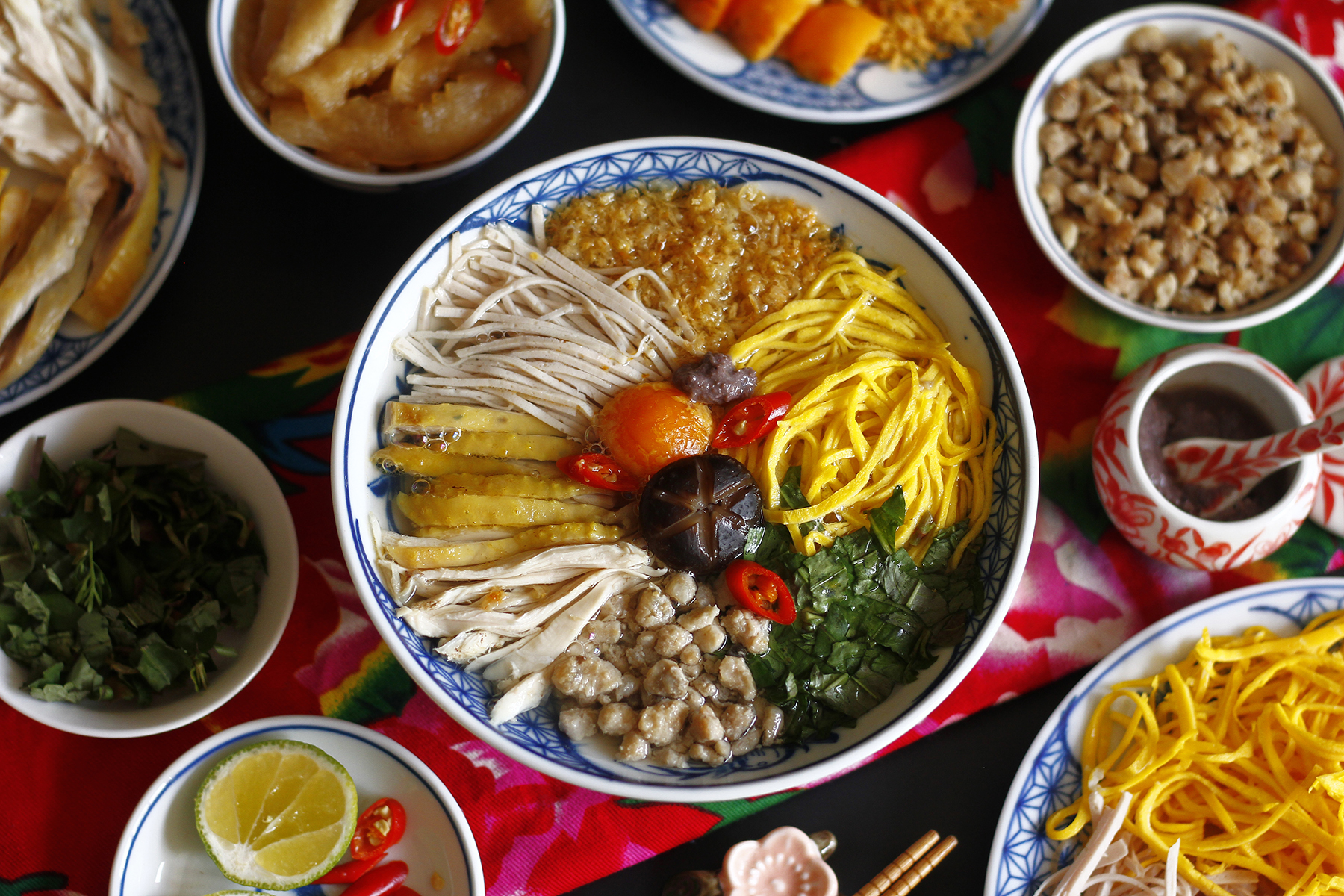
Source: Silkpath
1. What Makes Hanoi’s Bun Thang Special?
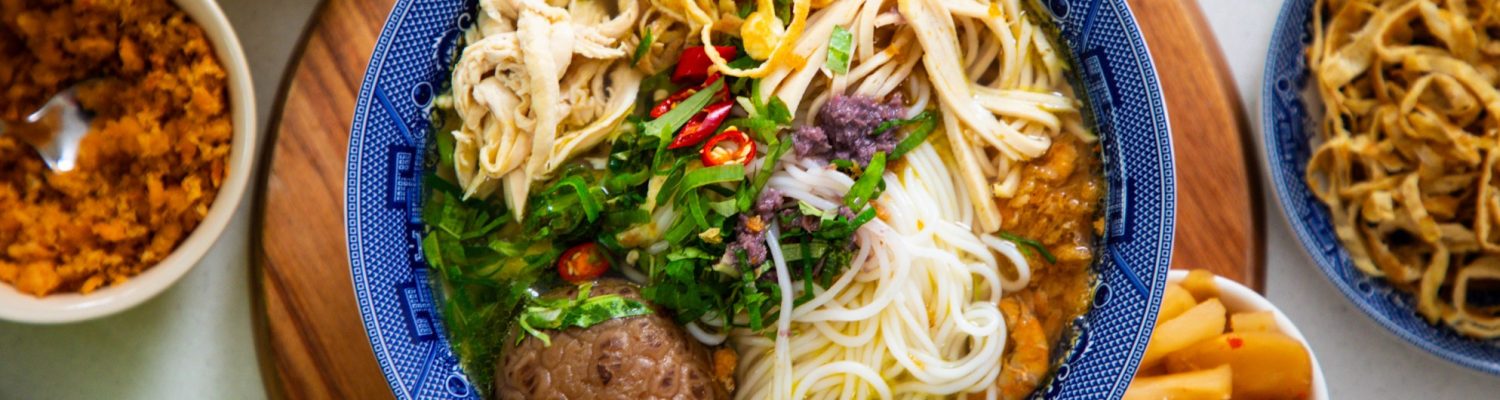
The appeal of Bun Thang lies in the harmonious combination of its ingredients rather than any single component. A traditional bowl can feature around 20 different ingredients, including shredded chicken, Vietnamese pork sausage, thin omelette strips, chicken skin, shiitake mushrooms, dried radish, spring onions and Vietnamese coriander. A small amount of fermented shrimp paste is sometimes added to enhance its distinctive aroma.
Presentation is another defining feature of the dish. Golden chicken, delicate yellow omelette, pale pink pork sausage and fresh green herbs come together to create an inviting bowl. With every spoonful, the light sweetness of the broth blends with tender chicken, the richness of eggs and the pleasant crunch of dried radish.
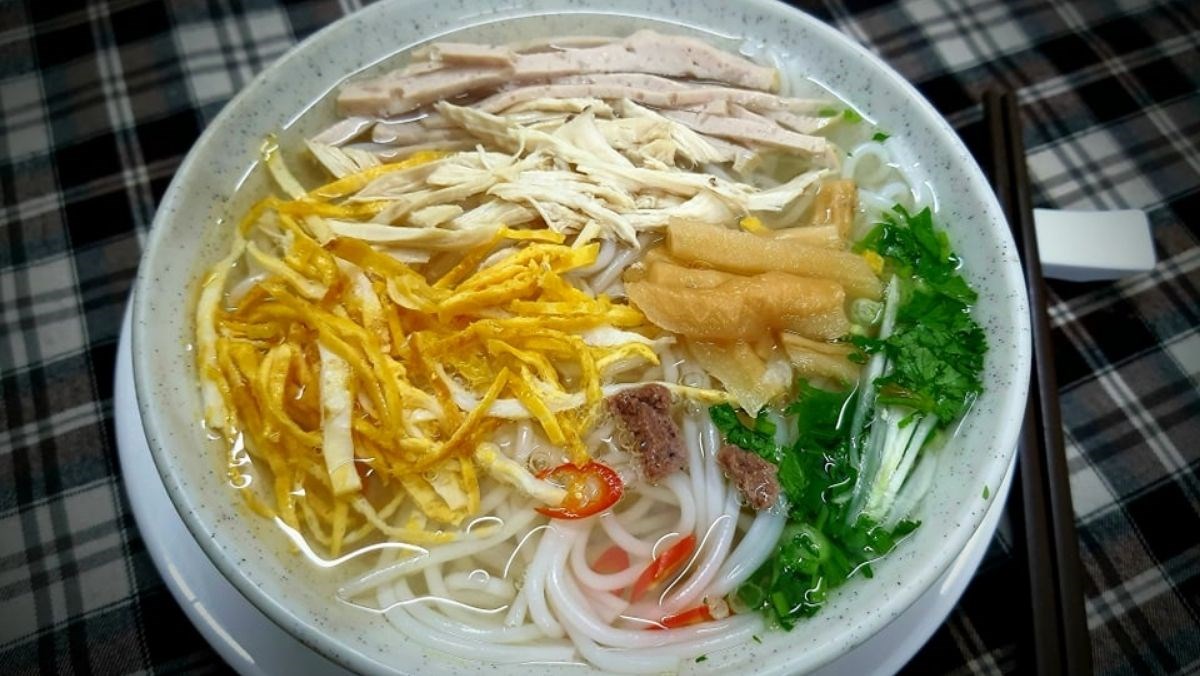
Source: Dien May Xanh
Bun Thang is also closely associated with the traditional Lunar New Year celebrations in Hanoi. In the past, families often prepared the dish after Tet using leftover ingredients from festive meals, such as boiled chicken, Vietnamese pork sausage and eggs. With the creativity and resourcefulness of Hanoi’s home cooks, these familiar ingredients were transformed into a delicate and flavourful dish.
Over time, each family developed its own recipe, passed down through generations. This tradition explains why Bun Thang can have subtle differences in flavour from one household or restaurant to another.
2. The Origins of Bun Thang: Where Does Its Name Come From?
There are several interpretations of the name “Bun Thang”. The most widely known explanation connects the word “thang” to a traditional medicinal herbal formula, which combines different ingredients in carefully measured proportions. Similarly, Bun Thang brings together numerous small components to create a balanced dish.
Other theories suggest that the dish may be associated with “Dan Hoa Thang”, a preparation from historical royal cuisine, while another interpretation understands “thang” simply as a reference to soup or broth.
Regardless of its exact origin, Bun Thang remains closely connected to Hanoi’s culinary traditions, particularly during Tet. After several days of enjoying rich festive dishes, its light and delicate broth offers a refreshing change of flavour. Today, Bun Thang is enjoyed throughout the year, not just during the Lunar New Year.
3. How Bun Thang Is Prepared: Attention to Every Detail
Behind the elegant appearance of Bun Thang is a preparation process that requires time, patience and careful attention to detail.
Chicken is first boiled and then placed in iced water to help firm up the skin. The meat is separated from the bones and shredded into fine strips, while the chicken skin is sliced into thin pieces. Chicken bones, sometimes combined with pork bones, are blanched and simmered with dried shrimp, grilled dried squid, roasted shallots and ginger to create a clear, naturally sweet and aromatic broth.
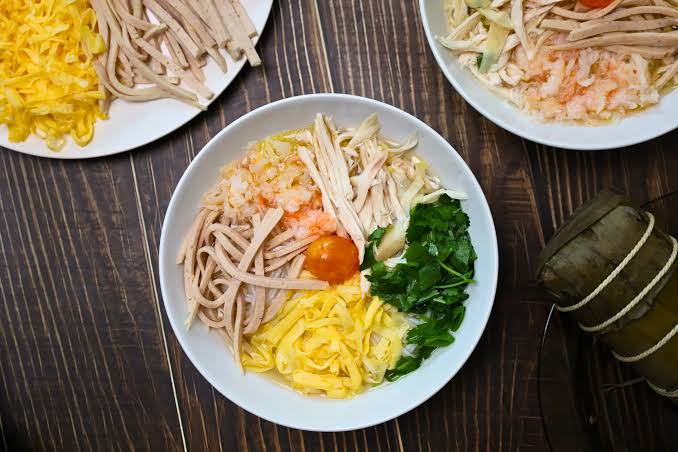
Source: Authentic Asian Recipes
Each topping is prepared separately to preserve its colour and flavour. Eggs are beaten, cooked into thin omelettes and finely sliced, while the pork sausage and chicken are carefully cut into bite-sized strips before being arranged over the noodles.
For those who appreciate traditional flavours, a few drops of Ca Cuong essential oil, a rare aromatic ingredient, may be added to give the dish its distinctive fragrance.
This meticulous preparation is what makes Bun Thang so special, reflecting the patience, skill and culinary refinement of Hanoi’s traditional home cooking.
4. Where to Find Delicious Bun Thang in Hanoi’s Old Quarter
If you would like to try this traditional dish while exploring Hanoi’s Old Quarter, here are three well-known addresses worth considering:
- Bun Thang Ba Duc – 48 Cau Go Street, Hoan Kiem: With a history of more than 30 years, this popular eatery generally opens from 4:00 PM to 10:00 PM and attracts many diners in the evening. Guests can choose from additional toppings such as young eggs and chicken offal. Estimated price: VND 42,000–135,000.
- Bun Thang Ba Am – 16 Lan Ong Street, Hoan Kiem: A familiar name among local food lovers, this eatery is appreciated for its traditional flavours and also serves other classic Hanoi dishes.
- Bun Thang Hang Trong – 22 Hang Trong Street, Hoan Kiem: A more budget-friendly option featuring familiar toppings such as shredded chicken, pork sausage, omelette, dried radish and Vietnamese coriander. Estimated price: around VND 25,000 per bowl, based on the original source.
5. How to Enjoy Bun Thang Like a Local
To fully appreciate the flavours of this traditional dish, keep a few simple tips in mind:
- Admire the presentation first: Take a moment to appreciate the colourful ingredients carefully arranged on top of the noodles before mixing them together.
- Add shrimp paste in moderation: A small amount enhances the flavour, but too much may overpower the delicate broth.
- Enjoy it with fresh Vietnamese coriander: Its distinctive aroma and slightly peppery taste help balance the richness of the eggs and pork sausage.
- Serve and enjoy while hot: The broth is best enjoyed freshly prepared, when its natural sweetness and aromatic notes are at their finest.
Grand Mercure Hanoi
9 Cat Linh Street, Hanoi, Vietnam
Hotline: +84 24 3211 5757
Email: H6936@accor.com
Grand Mercure Hanoi ☆☆☆☆☆
9 Cat Linh, O Cho Dua Ward, Hanoi, 100000 Hanoi
Vietnam
Tel: +84 24 3211 5757
Fax:+84 24 3244 4747
Email:
H6936@accor.com

Follow us
Stay in touch and connected to all the news and happenings.