Grand Mercure Hanoi - Upscale hotels & resorts
- Imperial Citadel of Thang Long – Discover a UNESCO World Heritage Site in the Heart of Hanoi
Grand Mercure Hanoi
Languages en
en
en
- English
- Tiếng Việt
- See this hotel on all.accor.com or brand website in other languages :
Imperial Citadel of Thang Long – Discover a UNESCO World Heritage Site in the Heart of Hanoi
The Imperial Citadel of Thang Long is one of Vietnam’s most significant historical landmarks, preserving more than thirteen centuries of the nation’s history. As the political and cultural heart of successive dynasties, including the Ly, Tran, Le and Nguyen, the citadel reflects the evolution of Vietnam’s ancient capital while standing as a living testament to the country’s rich cultural heritage.
Recognized as a UNESCO World Cultural Heritage Site in 2010, the Imperial Citadel of Thang Long is now one of Hanoi’s must-visit attractions for travelers seeking to explore the city’s history, architecture and enduring identity. In this guide, Grand Mercure Hanoi invites you to discover the citadel’s fascinating history, remarkable cultural significance and highlights that make it an essential stop on any journey through Vietnam’s thousand-year-old capital.
History
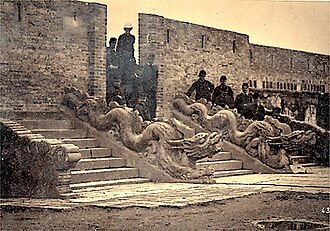
source: wikipedia
The Ly Dynasty – The Beginning of the Imperial Citadel
In 1010, Emperor Ly Thai To issued the famous Edict on the Transfer of the Capital, relocating the royal capital from Hoa Lu to Dai La and renaming it Thang Long (“Ascending Dragon”). This marked the beginning of a new era in Vietnamese history.
The emperor believed Dai La possessed exceptional advantages in terms of geography, transportation and feng shui, making it the ideal location for the nation’s political center. In the Edict on the Transfer of the Capital, he wrote:
“Dai La Citadel, the former capital built by Gao Pian, stands at the very center of heaven and earth, occupying the position of a coiled dragon and crouching tiger. It lies at the meeting point of north, south, east and west, with convenient rivers and mountains surrounding it. The land is broad and flat, elevated and bright, free from flooding and dampness, where the people prosper and all things flourish. Throughout the land of Viet, this is truly the finest location—the strategic gathering place of the four directions and the ideal capital for generations to come.”
Following the relocation, Emperor Ly Thai To and his court began constructing the first royal buildings of the Imperial Citadel, establishing it as the political and royal center of the kingdom.
The citadel was originally planned according to a three-ring defensive layout, consisting of the Outer Citadel (La Thanh or Kinh Thanh) protecting the capital and residential areas, the Imperial Citadel (Hoang Thanh) housing the royal administrative offices, and the Forbidden City (Tu Cam Thanh or Long Phuong Thanh) reserved exclusively for the emperor and the royal family. This master plan laid the architectural and political foundation for the Imperial Citadel over the following centuries.
The Tran, Le and Nguyen Dynasties
Throughout the Tran, Le and Nguyen dynasties, the Imperial Citadel continued to expand and evolve, remaining the country’s political, military and cultural center. New palaces, ceremonial halls, temples and royal residences were built while existing structures were renovated, further enhancing the grandeur of the imperial capital.
Following the victory over the Ming army in 1428, Emperor Le Thai To established the Later Le Dynasty and retained Thang Long as the capital, renaming it Dong Kinh. The Imperial Citadel underwent extensive restoration after the devastation of the war, with additional palaces and royal buildings constructed throughout the Le period. These developments transformed Dong Kinh into a magnificent imperial city, many traces of which can still be appreciated today.
Modern Era
Despite centuries of political change and conflict, the Imperial Citadel of Thang Long has preserved remarkable evidence of Vietnam’s imperial past while also witnessing many defining moments in the country’s modern history.
Following national reunification, greater efforts were devoted to preserving and researching the site, particularly after the large-scale archaeological excavations at 18 Hoang Dieu Street began in 2002. Millions of artifacts—including palace foundations, ancient wells, drainage systems and architectural remains from the Ly, Tran and Le dynasties—were uncovered, providing invaluable insight into the continuous development of Thang Long over more than a millennium.
Thanks to its outstanding historical, archaeological and cultural significance, the Central Sector of the Imperial Citadel of Thang Long was inscribed on the UNESCO World Heritage List in 2010. Today, it remains one of Vietnam’s most treasured historical sites and continues to attract visitors from around the world eager to explore the rich heritage of Hanoi.
Architecture and Cultural Significance
What makes the Imperial Citadel of Thang Long worthy of UNESCO recognition and one of Hanoi’s most remarkable attractions?
Over more than a thousand years, the citadel has evolved through successive dynasties, creating a unique architectural complex that reflects the artistic and cultural characteristics of the Ly, Tran, Le and Nguyen periods. Although many original structures have disappeared, surviving landmarks such as Doan Mon Gate, the stone dragon staircases and sections of the ancient walls continue to illustrate the sophisticated urban planning and architectural vision of Vietnam’s imperial past.
Equally important is the site’s exceptional archaeological value. Excavations at 18 Hoang Dieu uncovered millions of artifacts alongside palace foundations, wells, roof tiles, ceramics and ancient drainage systems spanning several dynasties. This rare continuity of cultural layers demonstrates the uninterrupted development of the imperial capital for more than one thousand years and was one of the principal reasons UNESCO recognized the site as a World Cultural Heritage Site in 2010.
Highlights of the Imperial Citadel
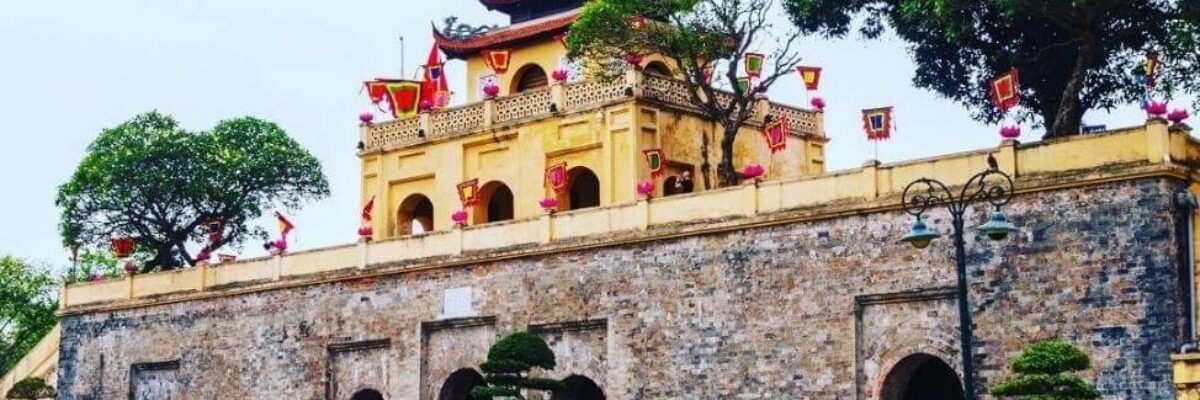
Doan Mon Gate
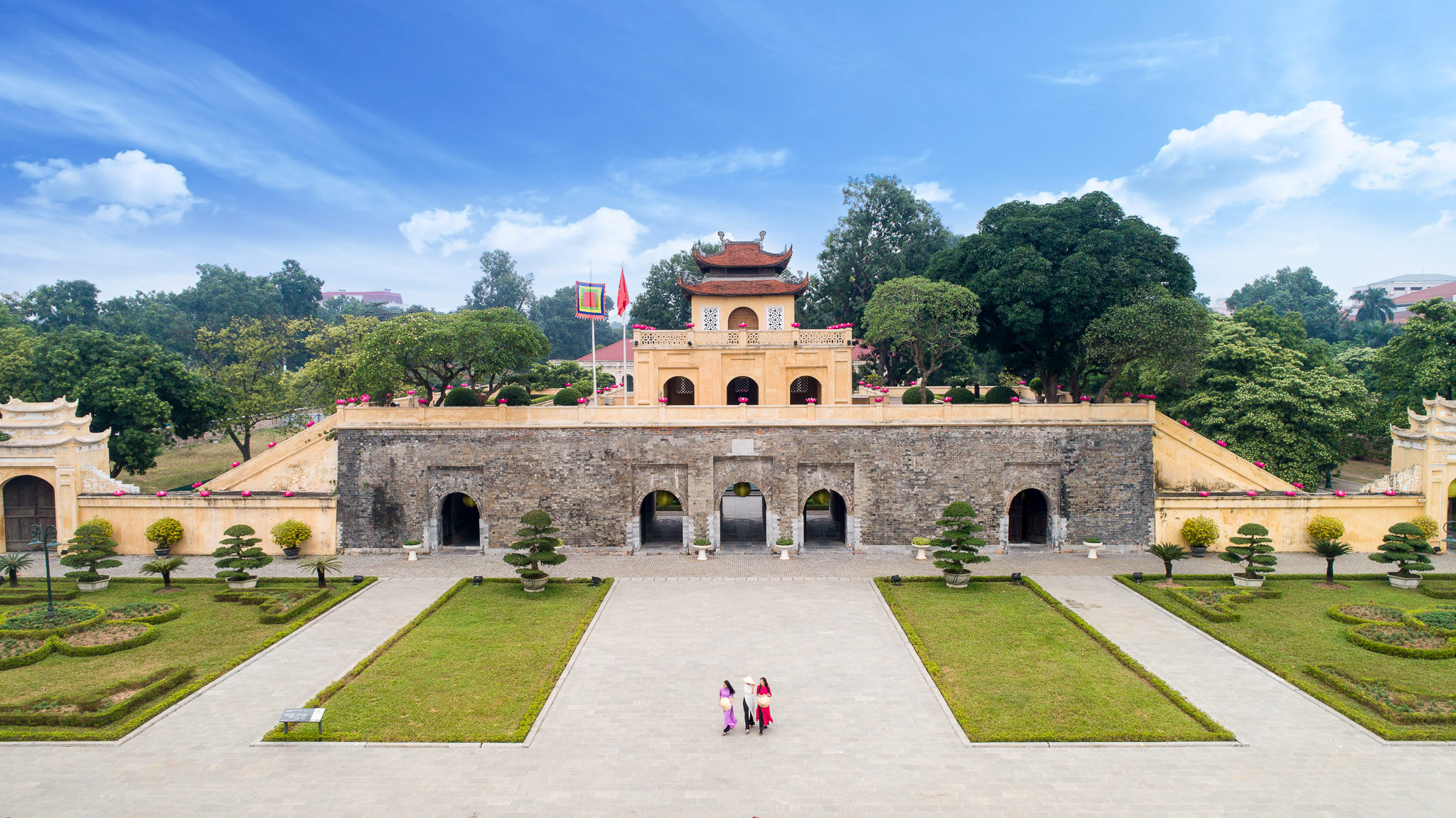
source: Hoàng thành Thăng Long
Doan Mon Gate served as the principal southern entrance to the Forbidden City, reserved exclusively for the emperor and members of the royal family. Originally built during the Early Le Dynasty and restored several times throughout history, it remains one of the best-preserved structures within the Imperial Citadel.
Constructed in the style of a traditional fortified gateway, Doan Mon features five arched entrances symmetrically arranged along the imperial axis. The central gate, standing approximately four meters high, was reserved solely for the emperor, while the four smaller side gates were used by royal family members and court officials during important ceremonies held at Kinh Thien Palace. Today, Doan Mon offers visitors their first glimpse into the grandeur of Vietnam’s ancient royal capital.
Hanoi Flag Tower
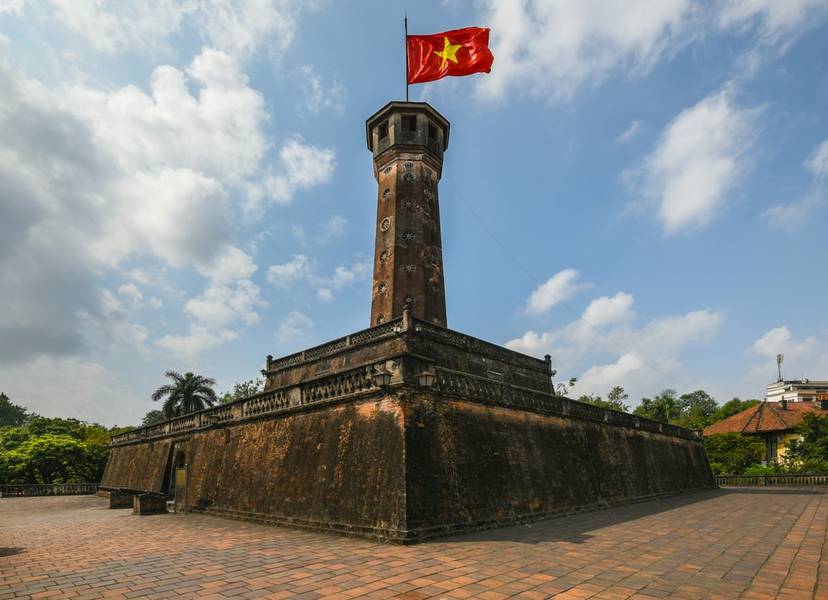
Ảnh: traveloka
Located adjacent to the Imperial Citadel, the Hanoi Flag Tower is one of the city’s most recognizable historical landmarks. Built in 1812 during the Nguyen Dynasty, it originally served as a military observation tower and has survived nearly intact through centuries of history.
Today, the soaring Vietnamese national flag flying atop the tower has made it a powerful symbol of Hanoi. Together with its elegant architecture, the tower remains a favorite spot for sightseeing and photography while exploring the surrounding heritage complex.
Kinh Thien Palace
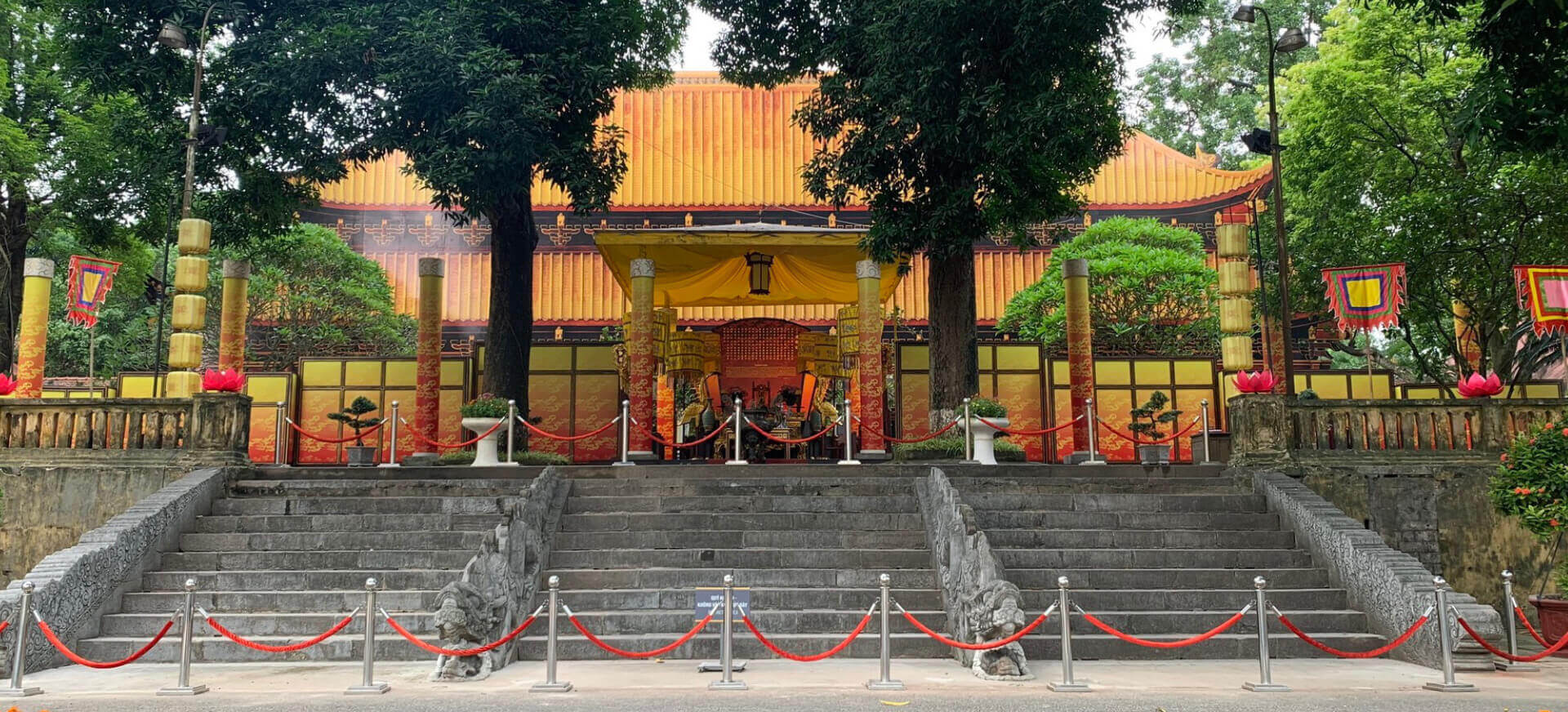
source: VinWonders
Kinh Thien Palace was the ceremonial and political heart of the Imperial Citadel. Constructed during the Early Le Dynasty upon the foundations of former Ly and Tran royal palaces, it served as the venue for royal audiences, diplomatic receptions and important state ceremonies.
Although most of the palace no longer survives, its elevated stone platform and the magnificent 15th-century stone dragon staircases remain among the most iconic symbols of the Imperial Citadel and are essential highlights for visitors interested in Vietnamese history.
House D67
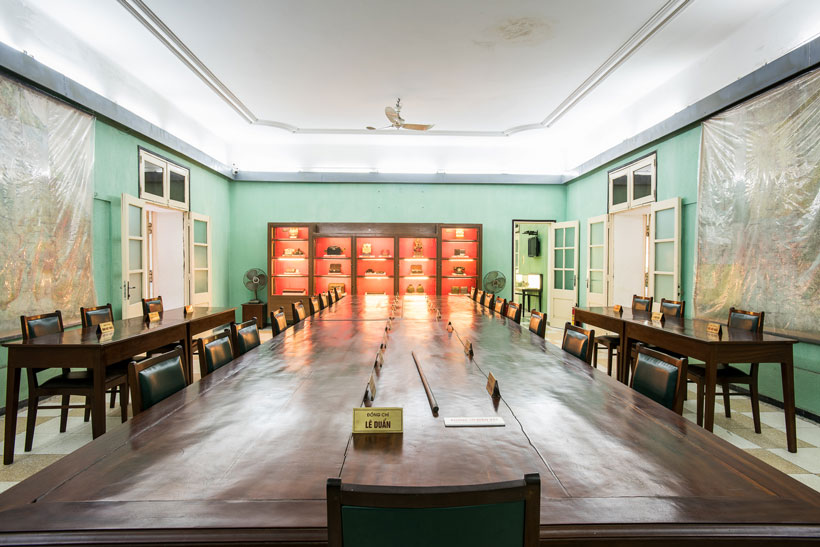
source: Hoàng thành Thăng Long
House D67, officially known as the Meeting Room of the Politburo and the Central Military Commission, represents a unique chapter in Vietnam’s modern history. Completed in 1967, the building served as the headquarters of the Vietnam People’s Army during the Vietnam War and hosted numerous strategic meetings of the country’s senior leadership.
Today, its conference room, offices and underground command bunker have been carefully preserved, allowing visitors to gain a deeper understanding of one of the most significant periods in Vietnam’s contemporary history.
18 Hoang Dieu Archaeological Site
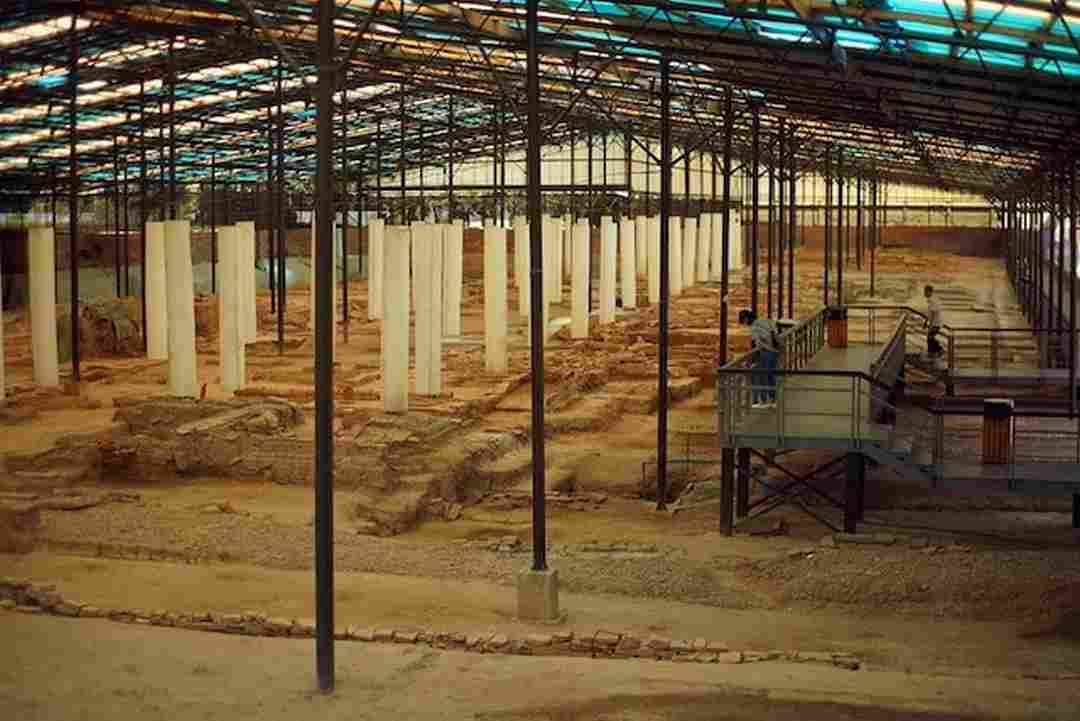
Source: Ditich365
The 18 Hoang Dieu Archaeological Site is one of Vietnam’s most important archaeological discoveries and provides compelling evidence of over one thousand years of continuous development in the imperial capital.
Excavations have revealed millions of artifacts together with palace foundations, ancient wells, drainage systems and architectural remains from the Ly, Tran and Le dynasties. These discoveries have enabled historians to reconstruct the appearance of the Imperial Citadel throughout different periods and played a crucial role in UNESCO’s recognition of the site in 2010. Today, the archaeological zone remains an unmissable destination for visitors eager to explore Hanoi’s rich cultural heritage.
Visitor Information
Opening Hours: Tuesday to Sunday, 8:00 AM – 5:00 PM
Admission Fees:
- Adults: VND 100,000
- Students and senior citizens: VND 50,000
- Children under 16: Free admission
For the best experience, Grand Mercure Hanoi recommends allowing 2–3 hours to explore the entire heritage complex. Visiting in the morning or late afternoon offers cooler temperatures and more comfortable conditions for walking, sightseeing and photography.
With its remarkable historical, architectural and archaeological significance, the Imperial Citadel of Thang Long is far more than a historical monument—it is a living museum that preserves over a thousand years of Vietnam’s cultural heritage. Every structure within the complex tells a unique story, making the citadel one of Hanoi’s most captivating destinations for travelers seeking to better understand the history and identity of Vietnam’s capital.
Grand Mercure Hanoi ☆☆☆☆☆
9 Cat Linh, O Cho Dua Ward, Hanoi, 100000 Hanoi
Vietnam
Tel: +84 24 3211 5757
Fax:+84 24 3244 4747
Email:
H6936@accor.com

Follow us
Stay in touch and connected to all the news and happenings.